

Now Reading: Science at the Scene: Delhi Police Leverages Forensic Expertise in Bawana Investigation
-
01
Science at the Scene: Delhi Police Leverages Forensic Expertise in Bawana Investigation
Science at the Scene: Delhi Police Leverages Forensic Expertise in Bawana Investigation

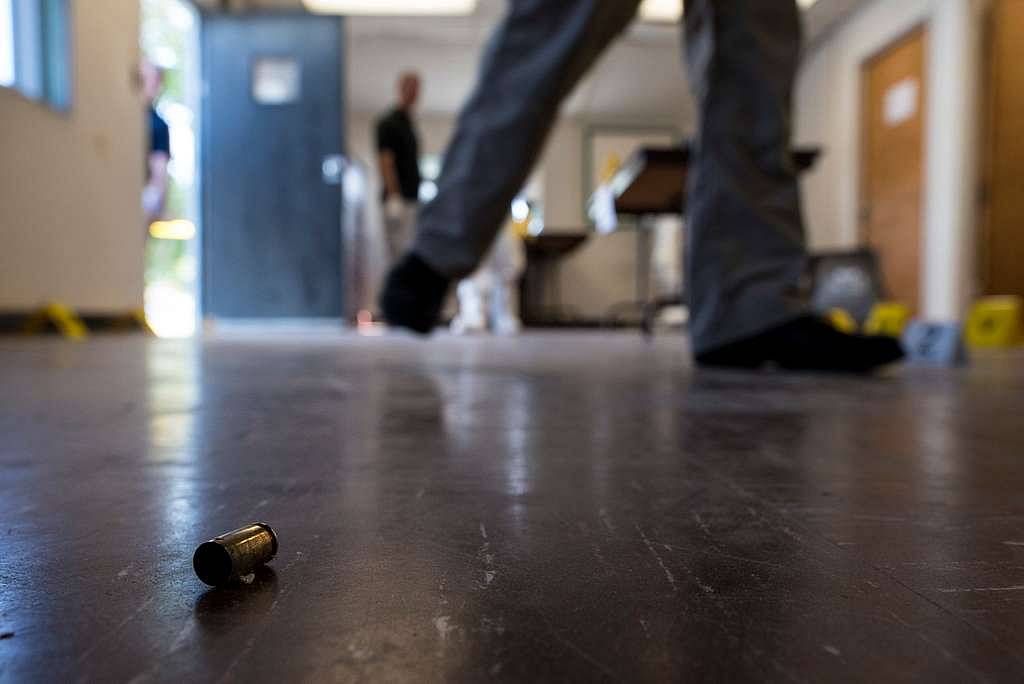
In a swift response to a violent shooting in Northwest Delhi’s Bawana Industrial Area, the Delhi Police have underscored the vital importance of scientific intervention in modern criminal investigations. Following the fatal shooting of a 35-year-old businessman, Vaibhav Gandhi, outside a local factory on February 9, 2026, specialized units, including a mobile crime team and experts from the Forensic Science Laboratory (FSL), Rohini, were immediately dispatched to secure the site. As the victim was targeted by unidentified assailants on a motorcycle who fired multiple rounds before fleeing, the scientific team focused on ensuring that physical evidence—often fragile and fleeting—was not lost to environmental factors or scene contamination. While local police search for the suspects via CCTV footage, the FSL team provides the objective backbone of the investigation by translating physical remnants of the crime into actionable legal proof.
The forensic relevance of this case is multifaceted, beginning with Ballistic Pattern Analysis. By recovering fired cartridges and projectiles, ballisticians can analyze “striation marks” and “firing pin impressions” to create a unique signature of the weapon used. This allows investigators to link the crime to a specific firearm once a suspect is apprehended. Furthermore, the mobile units are tasked with “lifting” biological trace evidence, such as touch DNA or blood spatter, which can provide a biological link to the perpetrators. This process is coupled with Crime Scene Reconstruction, where the documentation of bullet trajectories and the positioning of the victim helps investigators visualize the exact sequence of events. Under the modern legal frameworks of the Bharatiya Nyaya Sanhita (BNS), such forensic evidence is now mandatory for serious offenses, ensuring that the Delhi Police maintain their high standard of conviction through rigorous, science-based truth-seeking.