
Now Reading: Forensic Odontology: Current Practices, Research Underpinnings, and Future Trends.
-
01
Forensic Odontology: Current Practices, Research Underpinnings, and Future Trends.
Forensic Odontology: Current Practices, Research Underpinnings, and Future Trends.

Introduction
Forensic odontology is the use of dental science in law. It is very important in criminal investigations, civil litigation, identification of disaster victims (DVI), and humanitarian missions involving missing persons. The teeth are the most ideal, such that they resist degradation, fire and mechanical injuries when it comes to forensic examination. Dental tissues are able to hold individualizing characteristics even in extreme conditions of mass disasters or even in highly decomposed states.
In the past, the use of forensic odontology was dependent on the use of comparative appearance and experience. Nonetheless, the issue of subjectivity and scientific reliability, which has been raised by leading reviews of forensic science, has led towards evidence-based, standardized, and technologically enabled procedures. The multidisciplinary field of forensic odontology incorporates dentistry, radiology, computer science, statistics and legal medicine and is experiencing increased academic and judicial significance today.
Use of Teeth in Forensic Identification.
The anatomy of teeth exemplifies forensic information that is abundant due to the variation in the anatomy, as well as the endurance provided by the structure and the retention of teeth. The restoration of the teeth, prostheses, tooth morphology and radiography patterns form extremely individual patterns. Dental records like charts, radiographs and treatment history can be compared with a postmortem finding, and identity can be established with a high level of confidence.
Dental identification is another major international continuous identifier in mass disaster cases, along with fingerprints and DNA. Forensic odontology is specifically covered in the INTERPOL DVI protocol, specifically as one of the fundamental methods of identification, especially when applying it to fires, explosions, and aviation disasters, because other identification methods might be compromised.
Forensic Odontology Age Estimation.
Dental age estimation is used both on the living and the dead as legal matters concerning criminal responsibility, immigration, adoption, and unidentified remains. The traditional approaches mostly depend on the development of the teeth and their eruption in children and adolescents, and regressive alterations in adults. The most common radiographic measures are the Demirjian method, a procedure that assesses the stage of development of the mandibular teeth and its variant, known as the Willems method, which aims at eliminating systematic overestimation among some groups of people. The procedure of Cameriere, who measures the width of open apices, has also proved accurate in the juveniles. These methods have the disadvantage of being specific to the population and variable among observers in spite of their utility.
AI-based and Digital Age Estimation.
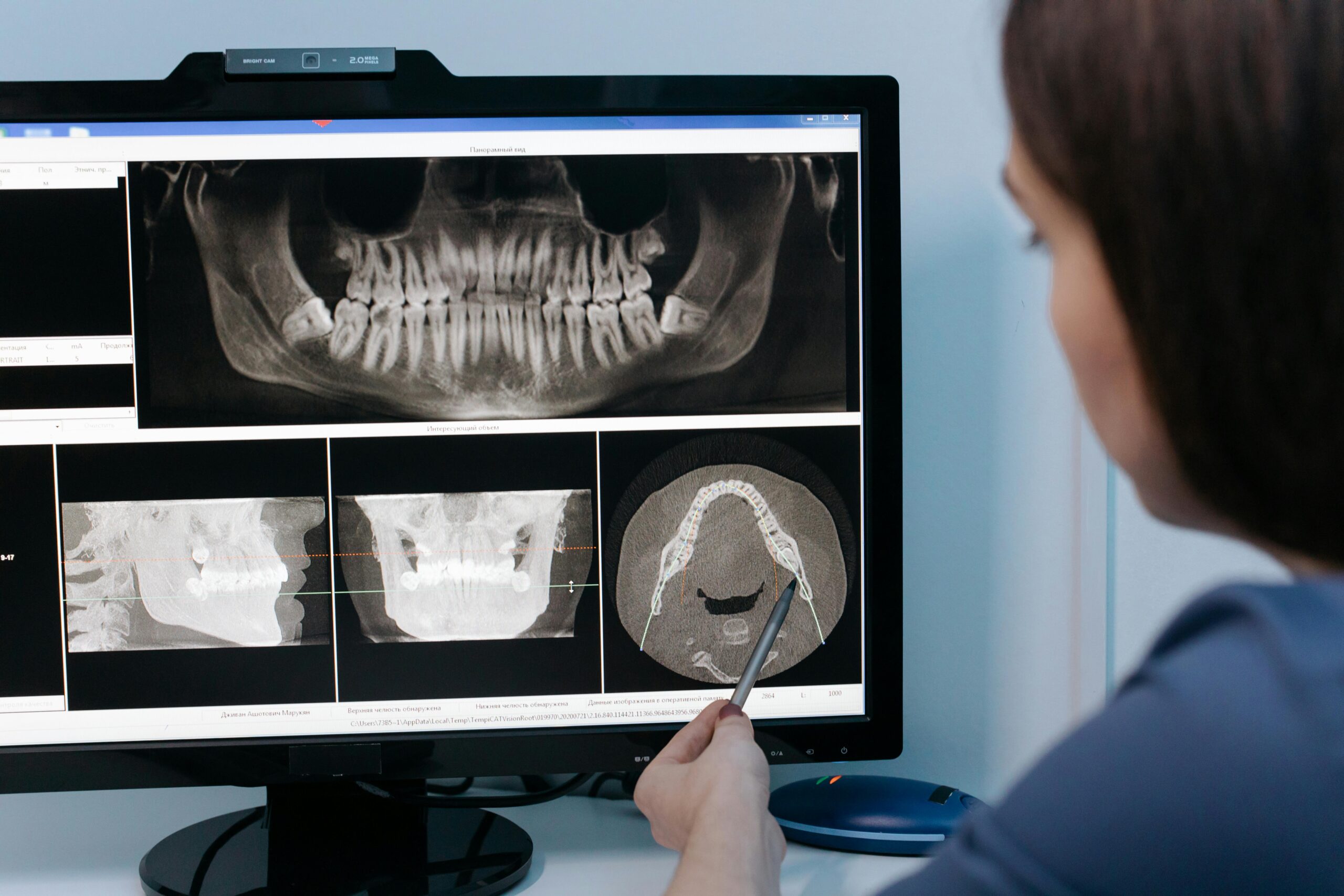
Understanding of artificial intelligence and deep learning has shown that dental age estimation can be greatly enhanced using these technologies. In 2025, an open-source study presented an adapted version of the Xception convolutional neural network trained on panoramic radiographs to recognise the forensic age threshold with great accuracy and reproducibility. Such systems eliminate human bias and offer standardised results, which is especially useful in a legal context.
New methods also involve 3D analysis of the volume of the pulp chamber with CBCT since secondary dentin deposition gradually decreases the pulp space as the age goes on. These volumetric techniques are becoming very popular due to their quantitative and reproducible characteristics.
Bite Mark Analysis: Now and Controversies.
Bite mark examination is a technique used to examine the evidence of patterned injuries to the skin or objects to determine whether they could be a result of human dentition. In the past, this method was extensively employed in prosecuting criminals. But scientific criticism has found evidence of enormous limitations, such as skin deformity, changes during healing, and excessive subjectivity by examiners.
The reliability of bite mark analysis has been questioned by major scientific bodies, which suggests that one should be very cautious in interpretation. Best practice currently restricts itself to conclusions on exclusionary or associative statements and not on definitional identification and insists on the use of DNA analysis wherever feasible.
Dental DNA Analysis
The teeth are the best sources of DNA, especially in the degraded soft tissues. Nuclear and mitochondrial DNA that can be used to identify and determine kinship can be retrieved in dental pulp and dentin. The success of the DNA recovery of old or damaged dental samples has been increased by the advances in next-generation sequencing (NGS). DNA analysis of the dentine is effective, particularly in mass disasters and missing persons cases.
Electronic and Technological Developments in Forensic Odontology.
3D Dentistry and 3D Imaging.
The combination of CBCT, intraoral scanners and 3D surface image has revolutionised forensic odontology. These technologies enable accurate digital documentation, virtual comparisons and long-term storage of data with no degradation. Remote sharing can be done with digital models, making it possible to collaborate with peers internationally and get a second opinion.
Artificial Intelligence and Machine Learning.
Age estimation is not the only application of AI, as it also finds use in automated tooth segmentation, pattern recognition, and decision support systems. Notably, more recent studies have focused on explainable AI (XAI) that offers clear reasoning mechanisms that can be reviewed by courts. There are also population-specific AI models that help to minimise bias and enhance accuracy in a wide range of demographics.
Legal and Ethical Issues.
The forensic odonatological evidence should measure up to admissibility criteria like Daubert and Frye, where methods used in the process should be testable, peer reviewed, and reveal error rates. Among ethical practices are the reduction of radiation exposure, informed consent regarding living subjects and proper communication of uncertainty in expert testimony. The transition to validated digital and AI-assisted practices is an advantage to legal defensibility.
Future Directions
The future of forensic odontology is in standardization, validation and integration with other fields. Huge open databases, population-oriented AI systems, and global recommendations will contribute to the increase in reliability. Further cooperation between dentists, forensic scientists, engineers and legal experts is necessary to make sure that new technologies are implemented in a responsible manner.
Conclusion
In forensic science, forensic odontology has continued to be the foundation of human identification, as well as age determination. Although the older techniques were rather stable, recent developments in digital imaging, artificial intelligence and molecular biology have contributed a large portion to increasing the scientific rigour and legal certainty. Evidence-based practice, transparency, and ethical responsibility will be some of the factors in ensuring that the discipline will remain credible in the academic and judicial worlds as it develops further.
References:
Yilmaz, E., Görürgöz, C., Kış, H.C. et al. Forensic dental age estimation with deep learning: a modified Xception model for panoramic X-Ray images. Forensic Sci Med Pathol 21, 565–579 (2025). https://doi.org/10.1007/s12024-025-00962-4
Radu CC, Hogea T, Carașca C, Radu C-M. Forensic Odontology in the Digital Era: A Narrative Review of Current Methods and Emerging Trends. Diagnostics. 2025; 15(20):2550. https://doi.org/10.3390/diagnostics15202550
Shan, W., Sun, Y., Hu, L. et al. Boosting algorithm improves the accuracy of juvenile forensic dental age estimation in southern China population. Sci Rep 12, 15649 (2022). https://doi.org/10.1038/s41598-022-20034-9